


Sam Fender has given the entirety of his £25,000 Mercury Prize winnings to the MVT, which works to protect the UK's small live music spots.
He was awarded the award on mid-October as his new release the album was declared the outstanding release of the previous year.
The musician has decided to give the cash to the trust, in appreciation of the vital role local spots played in his initial steps.
"I would not have achieved what I am doing today if it hadn't been for all the gigs I performed around the North East, and elsewhere, when I was just getting going," remarked Sam Fender. "These locations are iconic, but they are facing challenges."
From early 2023 onward, at least 150 of these spaces have ceased operations – roughly 16 percent of the entire UK sector.
Recently, well-known musicians such as Pulp, Coldplay, the singer Katy Perry and Ed Sheeran have all backed the MVT in its efforts to keep the scene afloat, by applying a small levy to their ticket prices, which benefits independent venues.
Sam Fender also took part, generating in excess of £100,000 on his live tour to help thirty-eight small stages across England, Scotland, and Wales.
These funds assisted venues that were dealing with imminent closure due to difficulties stemming from flooding, blazes and family tragedies, as well as permit problems, conflicts and noise complaints.
Other venues received monetary aid in improving facilities and sound and lighting systems that helped artists and fans.
"The concept that money from performances in large arenas supports the independent spots, where it begins for performers like me, is just logical," Sam Fender has commented.
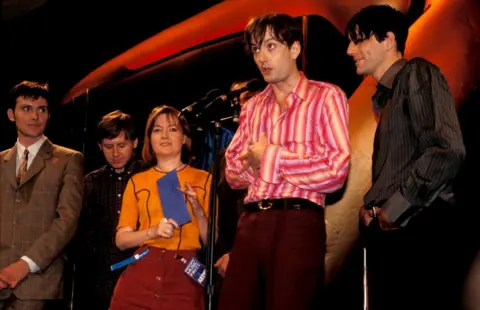
He is not the first artist to donate his award funds to charitable organizations.
When the band received the prize in 1996 for their record Different Class, lead singer the singer announced that the group would give their prize money to the non-profit War Child.
In 2002, musician she split her prize between a few good causes, such as the NSPCC and a charity for Sickle Cell.
"Additionally, I contributed a £1,000 to the center, to their gymnastics program, because I trained in gymnastics when I was growing up and they required updated gear," she shared with outlets.
Previously, they gave their funds to the community center that supported their group, in addition to other independent music bodies.
Also 1994 winners they donated their award to a multiple sclerosis charity after a friend was identified with the illness.
"Winning was ample," remarked singer the singer. "The cash was the extra but we didn't require the extra, because we had the main prize. So our victory impacted another person's life."
In the past week, the Music Venues Trust announced it had rescued a couple of small stages in south-east England, by bringing them into community ownership.
The Joiners in the city and the second in that location were bought under the community ownership program, which is funded by Arts Council England and enthusiasts who purchase "ownership units" in the properties.

